

First let me put things straight. My ability to speak Cornish is not this good. When somebody speaks to me in Cornish (Kernewek), my first reaction is to panic and hope that one of my stock Cornish replies will fit the bill. I have a better understanding of written Cornish (given time) and started out translating these besonntens of mine making use of various dictionaries, books of verb endings and the amazing Korpus from the Akademi Kernewek website ( akademikernewek.org.uk ). With further help from Viv Taskis, Tim Saunders, Pol Hodge and for the most part, Esther Johns and Delia Brotherton, the fifteen Cornish language besonntennow were brought to the stage that no-one so far seems to see anything wrong with them (which was my initial target). No doubt differences in spelling will be noticed but Cornish, despite its ancient history (it’s older than the English language), is a language in transition and to pre-empt any problems I decided to write the besonntens in the Standard Written Form, which is not the form I have been taught in myself…so if I can live with that, I guess others can.
In my previous post of The Fifteen Besants of Cornwall, I explained the history of this type of poetic form (and the history behind this particular form) and I would like to point out that the Cornish besonntennow below are not direct translations of the English versions because the need to adhere to the number of syllables would not work if translated directly. After each line is an English translation of the Cornish words.
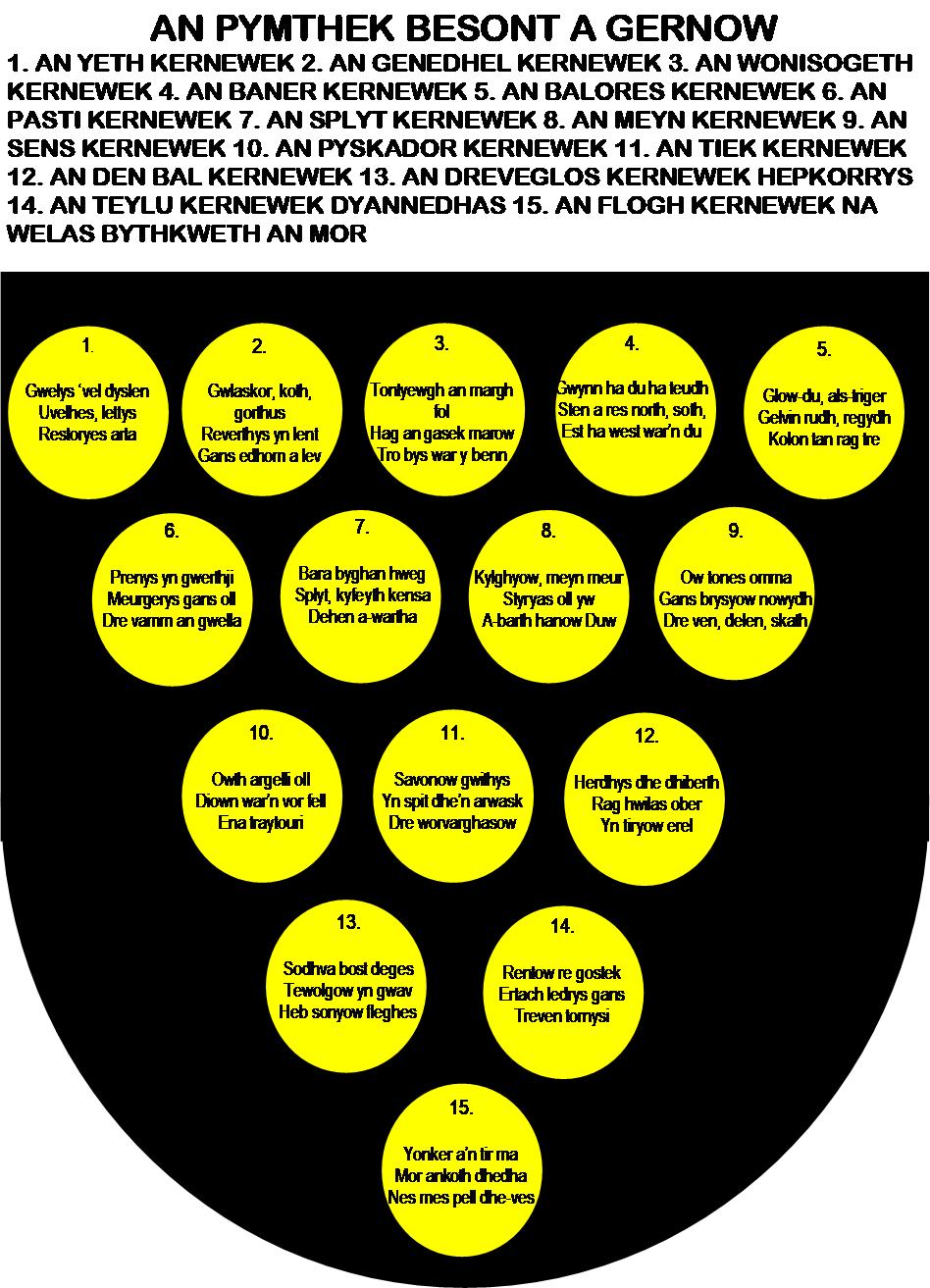
AN PYMTHEK BESONT A GERNOW
1: An Yeth Kernewek – The Cornish Language
Gwelys ‘vel dislen (Seen as seditious)
Uvelhes, lettys (Humiliated, stifled)
Restoryes arta (Restored again)
2: An Genedhel Gernewek – The Cornish Nation
Gwlaskor, koth, gothus (Kingdom, old, proud)
Reverthys yn lent (Overwhelmed slowly)
Gans edhom a lev (In need of a voice)
3. An Wonisogeth Gernewek – The Cornish Culture
Tontyewgh an margh fol (Taunt the mad horse)
Hag an gasek marow (And the dead mare)
Tro bys war y benn (Turn a world on its head)
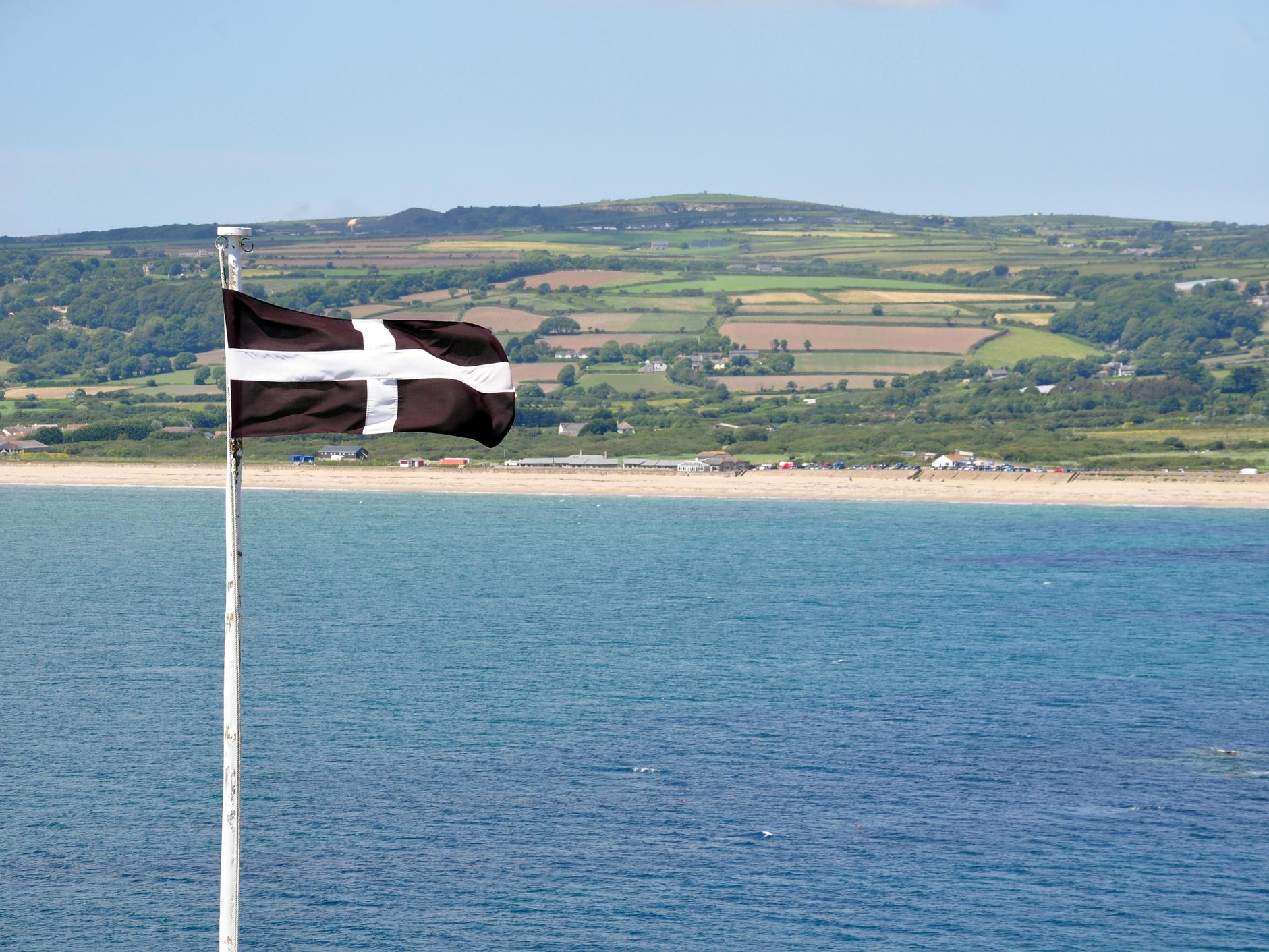
4. An Baner Kernewek – The Cornish Flag
Gwynn ha du ha teudh (Monochrome and molten)
Sten a res north, soth, (Tin flows north, south)
Est ha west war’n du (East and west on the black)
5. An Balores Gernewek – The Cornish Chough
Glow-du, als-triger (Coal-black, cliff-dweller)
Gelvin rudh, regydh (Red bill, an ember)
Kolon dan rag tre (A burning heart for home)
6. An Pasti Kernewek – The Cornish Pasty
Prenys yn gwerthji (Bought in a shop)
Meurgerys gans oll (Beloved by all)
Dre vamm an gwella (By mother the best)
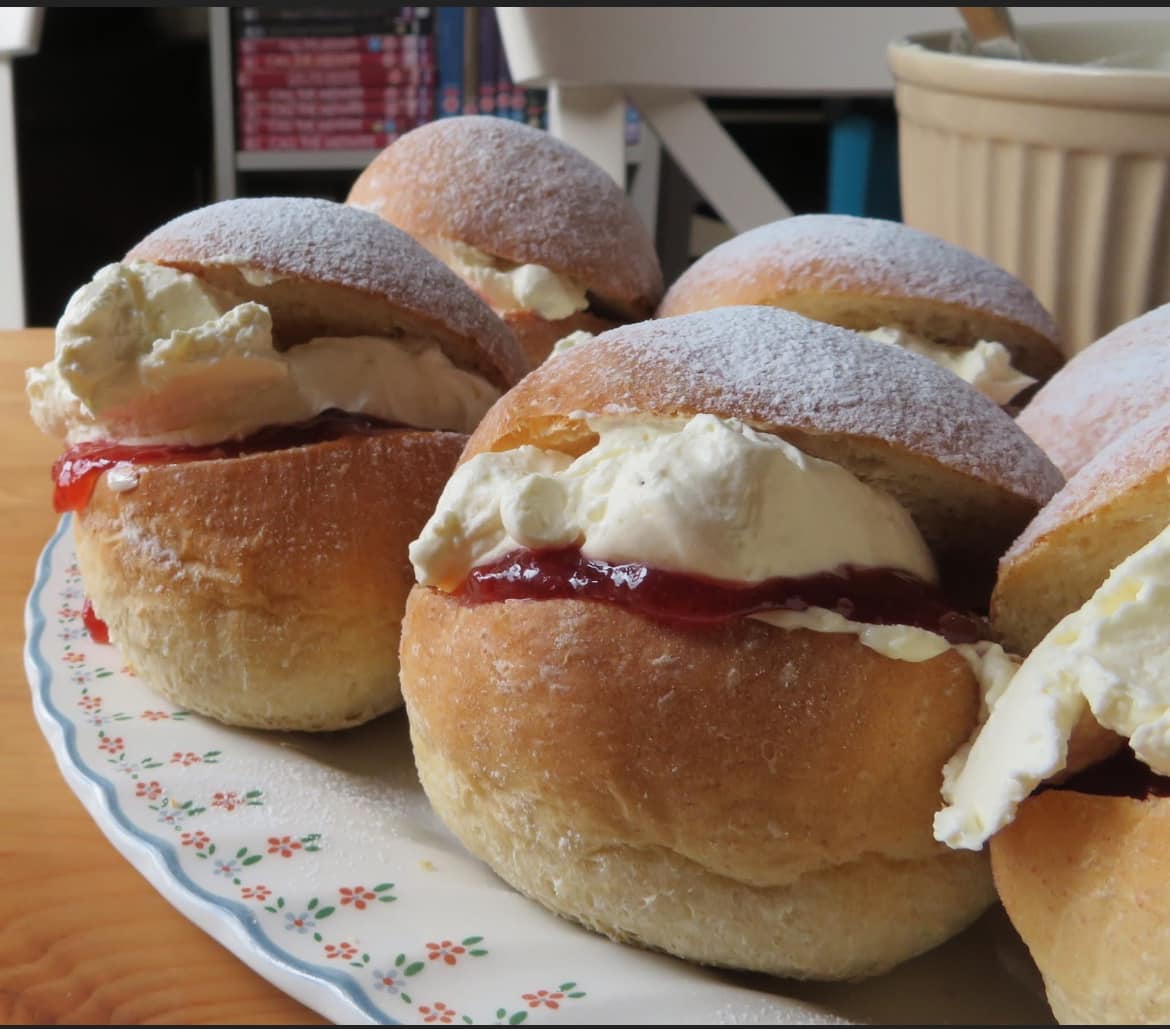
7. An Splyt Kernewek – The Cornish Split
Bara byghan hweg (Sweet bread roll)
Splyt, kyfeyth kensa (Split, jam first)
Dehen a-wartha (Cream on top)
8. An Meyn Kernewek – The Cornish Stones
Kylghyow, meyn meur (Circles, great stones)
Styryas oll yw (All interpreted)
A-barth hanow Duw (In God’s name)
9. An Sens Kernewek – The Cornish Saints
Ow tones omma (Arriving here)
Gans tybyans nowydh (With new thought)
Dre ven, delen, skath (By stone, leaf, boat)
10. An Pyskador Kernewek – The Cornish Fisherman
Owth argelli oll (Risking all)
Diown war’n vor fell (Fearless on the cruel sea)
Ena traytouri (Then treachery)
11. An Tiek Kernewek – The Cornish Farmer
Savonow gwithys (Standards preserved)
Yn spit dhe arwask (Despite oppression)
Dre worvarghasow (From supermarkets)
12. An Den Bal Kernewek – The Cornish Miner
Herdhys dhe dhiberth (Forced to leave)
Rag hwilas ober (To find work)
Yn tiryow erel (In other lands)
13. An Treveglosow Kernewek Hepkorrys – The Abandoned Cornish Villages
Sodhva bost deges (The Post Office closed)
Tewolgow yn gwav (Darkness in winter)
Heb sonyow fleghes (Without the sound of children)
14. An Teylu Kernewek Dyannedhas – The Cornish Family Dispossessed
Rentys re gostek (Rents too expensive)
Ertach ledrys gans (Heritage stolen by)
Treven tornysi (Housing tourists)

Painting: Harold Harvey
15. An Flogh Kernewek Neb Na Welas Bythkweth An Mor – The Cornish Child Who Has Never Seen The Sea
Yonker a’n tir-ma (Young one of this land)
Mor ankoth dhedha (Sea is unknown unto them)
Nes mes pell dhe-ves (Close but far away)
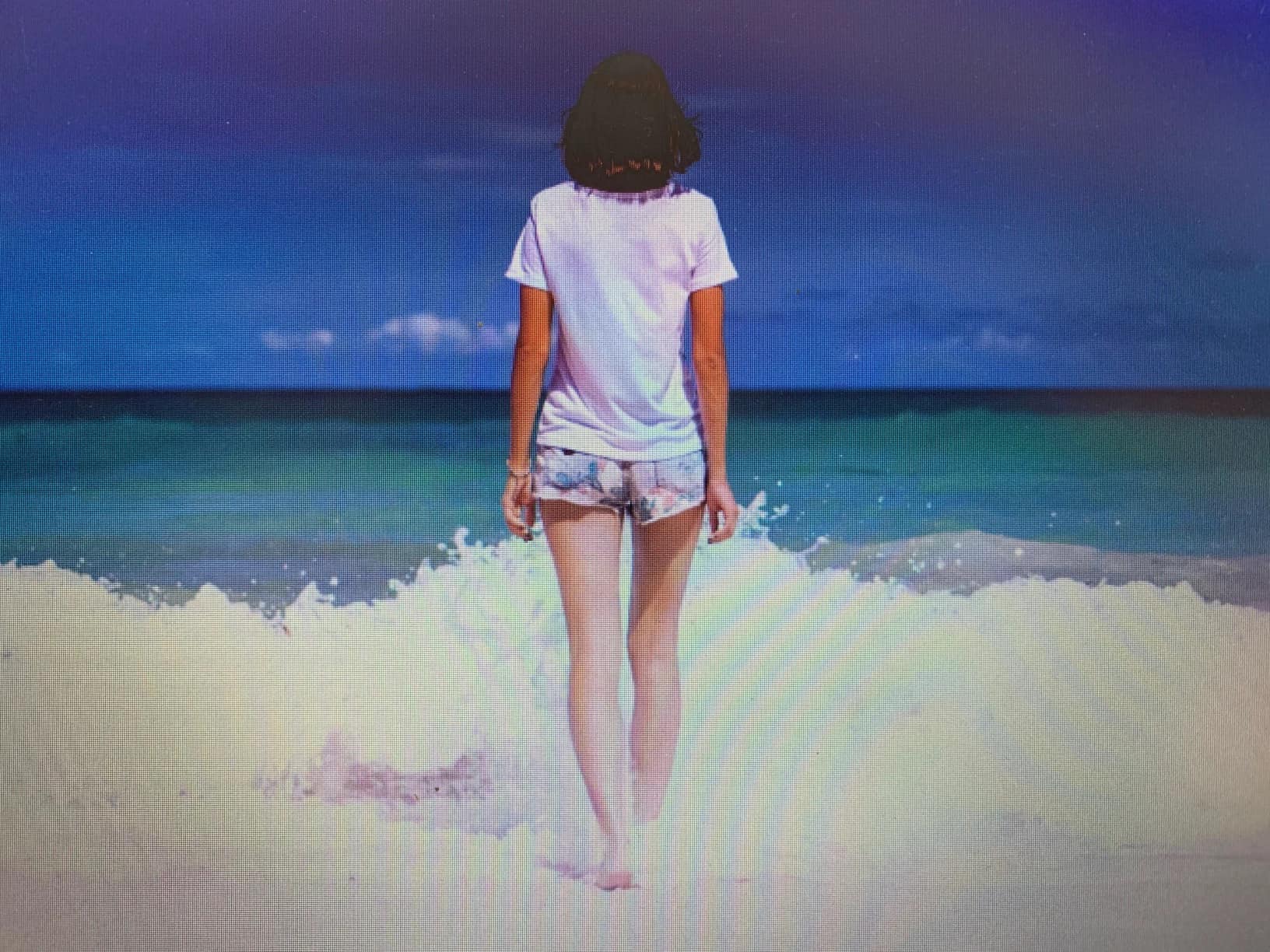
Photo: unknown
©graylightfoot
 gray lightfoot