
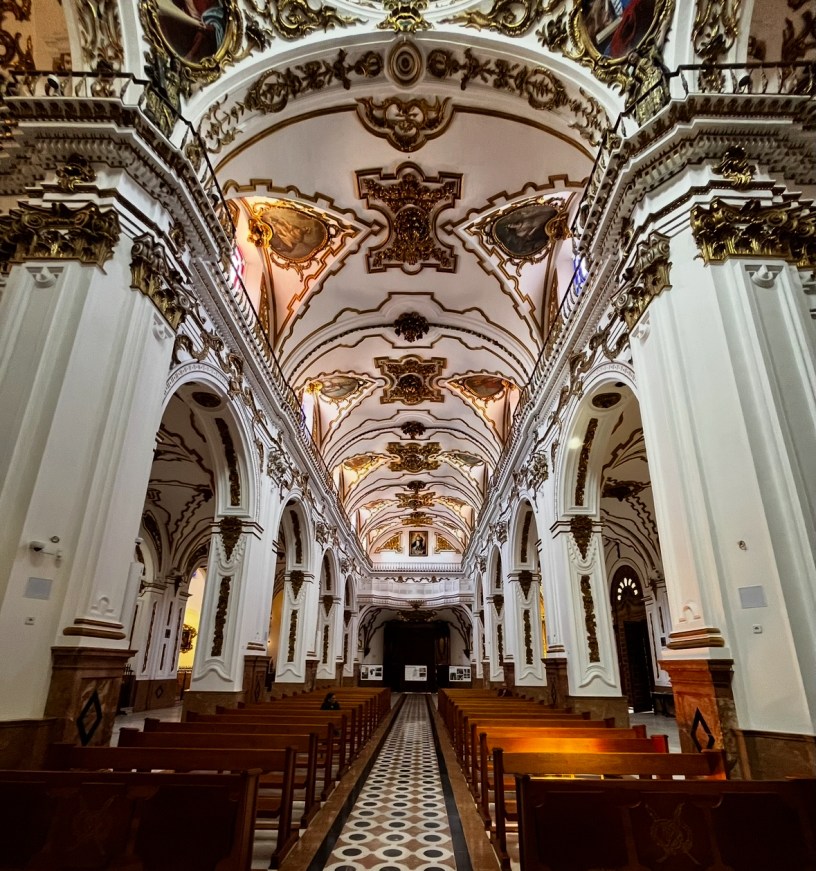
I no longer really enjoy visiting stately homes as much as I used to. We, the visitors, walk around bearing witness to the opulence the noble family once lived in (maybe still do). As I walk round my mind goes out to their servants and workers who most likely lived in abject poverty, all in order to keep their ‘betters’ in the manner to which they were accustomed.
By the same token, I still love wandering around old churches, but in a similar way the enjoyment is often tainted by the idea that such splendour came at the cost of the poverty of the people who worshipped here. It is a real paradox for me in that I must admire the beauty and craftsmanship on display but can’t help thinking that back then, in times of need, the church might have got its priorities wrong.
On visiting the Mezquita in Cordoba, Spain, a Catholic cathedral that once was a mosque in the Middle Ages before the Catholics banished the Moslems from Spain, I had quite a reaction to what I saw. The building is a split of both kinds of decorations. The Islamic ‘half’ is both beautiful and simple making use of decorative patterns (the creation of living forms is only the prerogative of Allah) and I found it wonderfully peaceful. When I passed through into a room filled with what I can only describe as Roman Catholic bling, displayed in glass cases, I found the juxtaposition from one place to another quite nauseating.
The churches in Cornwall, where I live, are mostly Church of England, and of much simpler tastes.
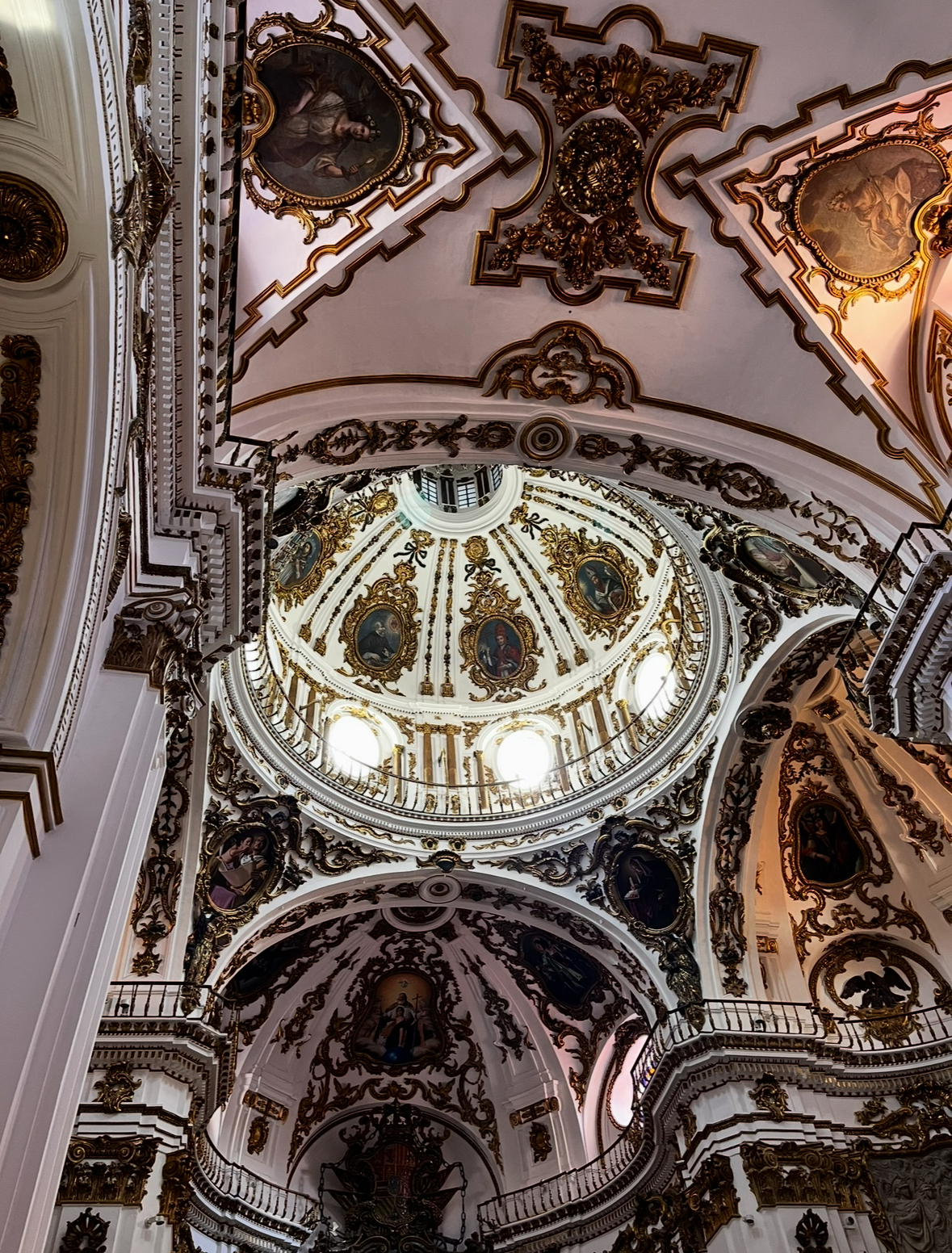
IGLESIAS DE LOS MARTIERES CIRIACO Y PAULA, MALAGA
(The Church of the Martyrs, St Ciriaco and St Paula)
This church, so unassuming
In its outward appearance,
Is so utterly beautiful inside,
With walls of icing and ginger bread
And floors wet with reflection
Polished perhaps by genuflection.
Dedicated to Ciriaco and Paula,
The patron saints of Malaga,
Who rather than deny their faith
Were tied to trees and stoned to death
On the banks of the Guadalquivir River.
I take my seat in one of the pews
And gaze around at the sumptuousness.
Amazed at the workmanship,
The skill and ingenuity
Of the craftsman who created
Such beauty to the glory of their God.
A couple of rows in front of me, a young woman
Scrolls through her phone for a minute or two,
Genuflects and crosses herself before leaving.
Her icons are calling;
Which gives me pause to reflect
On the various Madonnas that surround me
The Beyoncés and Lady Gagas of their day
Dressed by the best to impress.
They stay fixed in their cells of glitz and glam
Trapped forever like the cheap dolls
That clutter the souvenir shops
Surrounding the church.
These celebrities of centuries past
Are just as inaccessible as those today;
Kept from us by a screen;
Relics encased in their reliquaries
And admired by those who could only dream
Of such wealth and renown.

One wonders how the two martyrs,
Who would have had little
In their possession except their faith,
Might have come to terms
With such Roman decadence.
Paid for from the largesse
Of those with least to give,
In their sanctified names.
What tarnishes this bling of glorious excess,
For me, is that amid this concentration
Of undoubted splendour and accumulated wealth,
I find myself once again dismayed
At the shabbiness of electric candles
Switched on for twenty cents a prayer.

©graylightfoot
 gray lightfoot